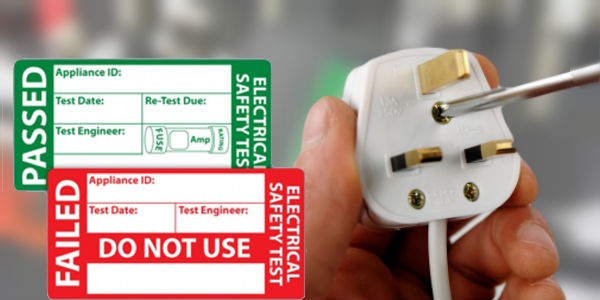
Top 10 Tips To Assess Qualified Technicians For PAT in Solihull
The competency of the individual who is performing Portable Appliance Testing (PAT) is what transforms an ordinary test into a safety system which can be legally justified. According to UK legislation (specifically the Electricity at Work Regulations of 1989), there is no obligation to obtain a license for testers of PAT. Regulation 16 says that persons are required to have "technical skills or expertise" in order to avoid injuries and harm. To meet the "competence principle," the employers (dutyholder) must choose and hire only technicians who have a combination or formal training in practical skills, as well as sound judgment. In the absence of mandatory certifications, there is many different levels of technical capabilities. Thus, it is important for duty holders to understand how to thoroughly verify technician competence. An electrician who is truly skilled is more than an electrician who is able to perform tests. They are aware of the fundamental principles behind electrical safety, and can precisely interpret the results, make an the right decision about whether to pass/fail, and provides valuable risk assessment insight.
1. The definition of competence under EAWR, 1989 in Solihull
Regulation 16 of 1989's Electricity at Work Regulations establishes the legal requirement. It states that persons need to be competent to avoid harm and danger. HSE defines competence as "the capability to complete an activity safely and efficiently without risk to oneself or to others." This includes three aspects: knowledge of electricity as well as expertise in the field, and understanding of the system. To be considered competent legally, they must possess all of these aspects.
2. The formal qualifications must be accompanied by a demonstrable level of competence. in Solihull
While formal education isn't legally required, it provides the most efficient method to demonstrate the knowledge. City & Guilds 2377 (In-service Testing and Inspection of Electrical Equipment) is the industry standard. The mere fact that you have this certification does not imply competence. Practical experience is required. A duty-holder should seek an appropriate qualification as well as evidence of experience in the field. To be considered competent without an official certification, they would have to demonstrate a wealth of knowledge and practical experience.
3. City & Guilds 2377 Qualification What is it?
The City and Guilds 2377 is a Level 3 qualification that assesses a candidate's knowledge of the IET Code of Practice and their ability to perform inspections and tests correctly. The City and Guilds 2377 exam is available in two distinct parts. 237777 (theory based multiple-choice test) and 237778 (practical assessment). The entire award demonstrates that the technician was evaluated independently in both his understanding and practical abilities. The certificate's number is a great method of confirming this certificate.
4. The Necessity of Practical Hands-On Experiential Learning in Solihull
A theoretical understanding is not useful without the ability to put it into practice. A skilled technician needs an extensive experience of testing a range of appliances in various settings. They are able to spot faults that a novice may miss, work in environments such as construction sites and industrial plants, and handle equipment safely. The duty holder should inquire with the prospective technician or service supplier about the tester's years of experience as well as the kinds of sites they usually are working on to assess the importance of their background.
5. Experience with the IET Code of Practice For In-Service Inspection and Testing
The IET Code of Practice, or Code of Practice for PAT Testing, is the standard for PAT testing. A skilled technician should not just possess a copy and a thorough understanding of its contents. This includes a thorough understanding of various classifications of equipment and the necessary procedure for visual inspections as well as testing, the correct use of testing tools, and most crucially, the pass/fail criteria. It is essential that they know how to follow and apply this guideline properly.
6. Understanding and calibration of Test Instruments
A competent technician understands the importance of their testing equipment is essential for obtaining accurate results. They should be aware that their PAT tester needs to be calibrated on a regular schedule (typically every year, or annually) by accredited UKAS laboratories to assure the accuracy of its readings. The device should have a current calibration certificate. The user should be able to make use of the device correctly, perform an everyday user test (e.g. performing an examination for lead), and interpret its results.
7. Capacity to Conduct Meaningful Visible Inspections in Solihull
A thorough inspection of the visuals can identify the majority of faults. Highly skilled technicians place the highest importance on this aspect by meticulously inspecting plugs as well as cables, connectors and casings for wear, damage or indications of excessive heat. They are also able to connect a plug with the right fuse rating. It's possible that testers with little experience might rush or skip this process entirely.
8. Applying the results to interpret them and apply pass/fail criteria in Solihull
The tester is only able to provide readings, but the technician is able to make the final judgement. Able to interpret the results in relation to the IET Code of Practice, the device and its pass/fail limit is a sign of proficiency. As an example, they need to be aware of the point at which a slightly higher insulation resistance reading is acceptable, or when an earth continuity reading is acceptable, but may be indicating the presence of a problem with the appliance in question. The real value of an expert is their ability to make educated choices.
9. The importance of insurance and liability in Solihull
While not required by law, an experienced technician must have Public Liability Insurance. The client is covered should the technician causes property damage during the testing. Furthermore, by engaging an experienced technician the duty holder can strengthen their legal defense of "due diligence," showing they took the necessary steps to choose the right person. This is vital when an electrical issue is later investigated.
10. Communication skills and documentation skills in Solihull
If there isn't clear and precise documents, the test process is ineffective. Technologist who is qualified must create detailed, legible documents and asset registers which correctly identify every appliance. The results of all tests should be documented and the outcome stated. Technicians must be able to communicate effectively with the duty holder in explaining the malfunctions, risks and required actions (e.g. repair or replacement). This communication plays a vital role in the overall safety procedure. See the recommended Solihull emergency light testing for blog info including extinguisher service, a fire extinguisher, fire extinguisher using, fire extinguisher, fire extinguisher service Solihull, fire electrical extinguisher, electrical extinguisher, fire extinguisher service Solihull, extinguisher testing, testing a fire extinguisher and more..
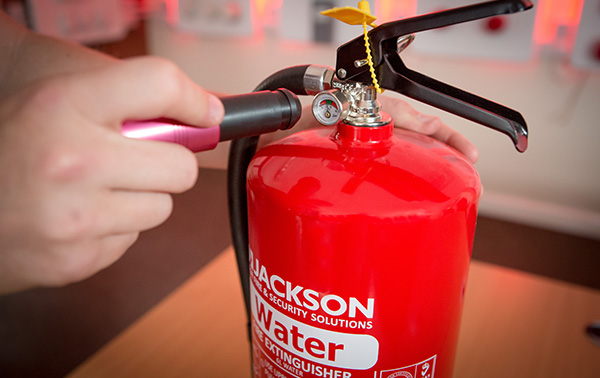
The Top 10 Tips To Fire Extinguisher Maintenance Certification in Solihull
The UK fire extinguisher industry is governed by a solid structure, which is designed to guarantee the safety, compliance and proficiency. The "Responsible person" (under Regulatory Reform (Fire Safety) Order, 2005) is responsible for selecting a competent service provider. Understanding the difference between qualifications and certifications are therefore not only a matter of technicality but also a crucial part of due diligence. There is a broad range of providers, including highly accredited firms to individuals, making it crucial to discern the meaning and value of different certifications. The wrong qualifications for a technician could cause a policy to be invalidated and not be in compliance with legal requirements and, most important, leave your property and its occupants vulnerable. This guide details the 10 most crucial aspects of certification and qualifications to make sure you choose the most competent partner to ensure your safety in the event of a fire.
1. The Gold Standard: UKAS-Accredited Third-Party Certification (BAFE SP101)
It is crucial to determine whether a business is registered with the BAFESP101 scheme. BAFE (British Approvals for Fire Equipment) is a independent registration body. SP101 was designed to specifically keep fire extinguishers in portable units. It is crucial to know that this scheme is certified and accepted by UKAS. It means the scheme as a whole has been rigorously tested against international standard. Accredited by UKAS, the BAFE SP101 certificate is the highest demonstrable evidence of a company's competence. It confirms that the company's employees are regularly audited and also its working practices as well as its equipment and quality management system.
2. The Alternative Benchmark is FIRAS certification
FIRAS – Fire Industry Association Recognition and Accreditation Scheme – is another UKAS accredit certification scheme that's operated by the Fire Industry Association. It is the exact equivalent to BAFE SP101, both in terms of rigor as well as reputation. FIRAS provides the exact same level of assurance, that a company was independently evaluated and audited to ensure that it is in compliance with BS 536-3. If you're a responsible person, a company holding either BAFE SP101 or FIRAS certification represents a compliant and reputable choice. The UKAS certification of the scheme is what matters.
3. The Foundation: Conformity with BS 533-3 in Solihull
Any qualification or certificate is ultimately about proving adherence with the British Standard BS 5306-3 (2017). This code is the definitive guide to fire extinguisher service. Professional technicians need to be educated in its rules that outline the procedure for monthly inspections, annual regular maintenance, 5 year extended services for extinguishers made of water/foam/powder as well as a 10-year overhaul of CO2 units. These certifications, such as BAFE or FIRAS, audit and verify the compliance. When evaluating companies, ask the company to explain the ways they comply with this standard.
4. Individual Technician Competence: FIA Units of Competence
While a company's certification is important however, the job is completed by technicians. The FIA Units of Competences are the most widely recognized individual qualifications. These modules of training are national recognised and assessed in accordance with National Occupational Standards. These are the key elements:
FIA Module 01: Portable Fire Extinguishers Maintenance (Core Module)
FIA 010: Upgrade of Portable Fire Extinguishers.
A competent mechanic should possess at a minimum, FIA Unit 011. Technicians who offer extended service (e.g. discharges for five years) must also hold the Unit 010. Request potential service providers to provide information about the credentials of their technicians.
5. The Role of Trade Associations in Solihull
A trade association, such as the FIA, BAFE or BAFE does not equate to the status of a certification. The business could be a member but not have to follow their technical rules. It is not enough to prove competence. Never rely on a general logo for membership, but instead the endorsement of a specific technical scheme (e.g. SP101 BAFE).
6. Insurance: Professional Indemnity, and Public Liability in Solihull
Insurance is a crucial requirement for any company that is reputable. Public Liability Insurance should be large (e.g. at minimum PS5 million or more). It will pay for any damage done to your property by their employees. Professional Indemnity Insurance, which covers the costs of correcting any mistakes in their work or providing advice is also essential. This insurance is a requirement of certification. It is recommended to always request to see proof of coverage prior to utilizing the services of any firm.
7. Manufacturer-Specific Training
Although the principles of BS 5306-3 are universally applicable the different manufacturers of extinguishers have distinct valve models, valve mechanisms, and recharge procedures. A highly qualified technician will often undergo manufacturer-specific training. This is especially important for more uncommon or complex extinguisher types like cleaner or wet chemical systems. This type of training will ensure technicians can service your equipment safely and properly without voiding any manufacturer warranties.
8. The Auditing Process What is the best way to ensure that certification be kept in Solihull
It is essential to realize that certifications are not just one-time award. BAFEand FIRAS certified companies are required to undergo annual audits conducted by accredited auditors. These audits are conducted without notice and consist of reviewing documentation while interviewing technicians as well as watching work carried out in the field. These certifications have their value since they are regularly scrutinized by external parties. This guarantees that the competence of technicians isn't just assessed at one moment and maintained.
9. The "Skilled Person", "Competent Person", or "Competent Person?"
There is a legal distinction. The Fire Safety Order stipulates that only a "competent person" is allowed to maintain the equipment. The law of the land suggests that this is an individual with enough training, experience, knowledge, and other qualities to be able to apply the necessary measures. A "skilled person" (or skilled tradesperson) is a person who has the physical capabilities to complete a task. A qualified fire extinguisher specialist has the knowledge and skills to perform the job. They also need to have the ability to understand the rules, standards, hazards and other risks.
10. Due diligence: confirming certificates and claims
The responsible person is ultimately responsible for ensuring that qualifications are fulfilled. It is not sufficient to display a logo on the van or web site.
Verify Online Verify Online: Both BAFE as well as the FIA have online directories where you can look up a company by name to verify their certified status. in Solihull
Request certificates: A legitimate company will be glad to provide copies their BAFE or FIRAS certificates along with insurance certificates and proof that their technicians are certified by the FIA certifications. in Solihull
Check Expiry dates: Make sure that all insurance policies as well as certificates are up-to-date. in Solihull
This verification is your best defense against a shoddy service provider. It's also the basis of your own due diligence. See the most popular Solihull fire extinguisher servicing for website examples including extinguisher fire extinguisher, fire electrical extinguisher, extinguisher testing, extinguisher service, fire service fire extinguisher, fire service fire extinguisher, extinguisher company, extinguisher fire extinguisher, fire extinguisher company, fire extinguisher extinguisher and more. More broadly, take a look at the most popular electrical equipment testing for more.